

Introduction
Choosing a web development company in Canada should feel straightforward, but most businesses end up overwhelmed. Quotes look similar, portfolios all look “professional,” and every agency promises a modern website. The problem is that two websites can look nearly identical on the surface while performing completely differently in real life. One will load fast, convert visitors, support SEO, and stay stable. The other will feel slow, be hard to update, generate weak leads, and require expensive fixes within months.
What a Website Should Actually Do for Your Business
- Communicate clearly what you do and who it’s for
- Build trust quickly through proof and professionalism
- Convert visitors into calls, bookings, or inquiries
- Support SEO and local visibility over time
- Work flawlessly on mobile
- Stay secure and easy to maintain after launch
The 3 Types of Web Development Providers in Canada
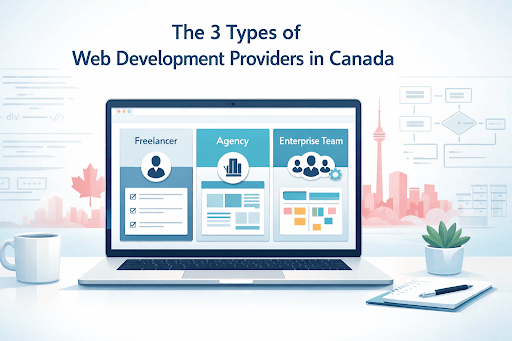
1) Template-first builders
2) Professional agency builds
3) Custom development teams
What a High-Quality Web Development Scope Should Include
1) Discovery and planning
- Goals and target audience clarification
- Sitemap and page structure planning
- Content requirements and responsibilities
- Conversion path planning (what action you want visitors to take)
- Basic SEO structure considerations
2) UX and conversion-focused design
- Mobile-first layouts and navigation
- Clear hierarchy and scannable sections
- Strategic placement of calls-to-action
- Trust signals near decision points (reviews, proof, process, FAQs)
- Forms designed to reduce friction
3) Development with performance standards
- Clean page templates and reusable components
- Performance optimization practices (images, caching, reduced bloat)
- Mobile responsiveness tested across devices
- Accessibility-friendly structure where applicable
4) SEO foundations built in
- Clean URL structure and proper heading
- Metadata standards (titles, descriptions)
- Image optimization and alt text support
- Internal linking readiness through navigation and page hierarchy
- Redirect planning if rebuilding an existing site
5) Integrations and lead capture
- Forms that capture the right fields and reduce spam
- Click-to-call and booking links where relevant
- Email routing and CRM connection if applicable
- Tracking readiness (forms, calls, bookings)
6) Testing and launch
- Form testing and lead routing verification
- Mobile usability testing
- Speed checks
- Tracking and analytics validation
- Post-launch support window for fixes
7) Handover and ownership
- Admin access and full ownership of accounts
- Training on basic edits and publishing
- Documentation for key workflows
- A clear maintenance plan option
How to Compare Pricing the Right Way
- Pricing is usually driven by:
- Number of unique page templates (not just number of pages)
- Copywriting needs vs client-provided content
- Custom functionality (calculators, portals, booking flows)
- Design complexity and iteration rounds
- SEO structure and migration needs
- Integrations (CRM, email, payments, scheduling)
- Testing depth and post-launch support
The Questions That Reveal a Strong Web Development Company
Strategy and structure
- How will you structure the site to support lead generation?
- Do you recommend dedicated service pages and why?
- What will you need from us to finalize content and messaging?
Conversion and UX
- How do you design around conversions, not just aesthetics?
- What will you do to reduce friction on mobile?
- How do you place trust signals near calls-to-action?
Performance and security
- How do you ensure fast mobile performance?
- What is your backup and update strategy?
- How do you handle spam protection and form security?
SEO and tracking
- What SEO foundations are included in the build?
- How do you handle redirects if we are rebuilding?
- What tracking will be in place at launch to measure leads?
Ownership and support
- What will we own at the end of the project?
- Will we have admin access to everything?
- What happens after launch if we need updates or ongoing support?
Red Flags That Usually Lead to Regret
If you see two or more of these, be cautious.
- No discovery or sitemap planning
- Vague deliverables like “modern redesign” with no detail
- No mention of mobile performance or speed
- No discussion of conversion paths or lead tracking
- Heavy reliance on plugins without governance
- No backup and security plan
- No handover training or documentation
- Refusal to provide full access and ownership
A Simple Decision Framework
How Larimar Digital Supports Website Builds
Larimar Digital builds websites as growth assets. Our Web Design & Development approach focuses on clarity, conversion-first structure, SEO foundations, and performance standards so your website supports marketing rather than limiting it. If you want a web partner that builds for outcomes, visit the Web Design & Development page on larimar.digital and use View Pricing and Packaging when you’re ready to explore options.