

Introduction
Hiring a web development company in Canada is no longer just about getting a website online. In 2025, your website needs to perform like a growth asset. That means it must load fast on mobile, communicate clearly, rank for the right searches, convert visitors into leads, and stay stable and secure long after launch. The technology choices behind your website directly influence all of those outcomes.
The New Baseline for “Modern” Websites
- Fast load time on mobile and stable performance
- Responsive layouts that feel smooth and easy to use
- Clear page structure that supports SEO and conversion
- Secure forms, SSL, and reliable backup systems
- Easy content management so your team can update pages and publish blogs
- Tracking readiness so you can measure leads from SEO and ads
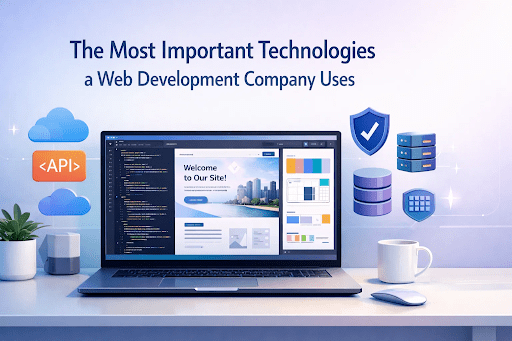
The Most Important Technologies a Web Development Company Uses
1) CMS and Platform Selection Based on Business Model
The best technology is the one you can maintain consistently. A web development company Canada businesses can rely on should recommend platforms based on how you sell and how you operate.
Common platform decisions:
WordPress for service businesses that need flexible pages, strong SEO foundations, and easy blog publishing.
2) Performance Engineering and Speed Optimization
- Optimized images (proper sizing, compression, modern formats where appropriate).
- Clean code and reduced bloat (especially plugin bloat).
- Caching configuration and asset delivery best practices.
- Mobile-first checks before launch.
- Lean page templates that prioritize clarity and speed over heavy effects.
3) Security and Stability Standards
- SSL setup and secure hosting configuration.
- Form security and spam protection.
- Backup automation and restore testing.
- Update governance (plugins, themes, core software, dependencies).
- Role-based access so admin permissions are controlled.
- A documented maintenance plan after launch.
- A website that is “secure at launch” but not maintained will become a risk. Security is ongoing.
4) Accessibility and Usability Standards
- Readable typography and strong contrast
- Logical heading hierarchy and scannable structure
- Keyboard-friendly navigation and focus states
- Accessible forms with clear labels and error messages
- Touch-friendly spacing and buttons on mobile
- If your website is hard to use, it underperforms even with strong traffic.
5) SEO Foundations Built Into Development
- Clean URL structure and consistent page templates
- Correct heading hierarchy (H1, H2, H3)
- Meta title and description standards
- Image optimization and alt text structure
- Schema readiness where relevant (local business, FAQs, services)
- Internal linking readiness through navigation and page hierarchy
- Fast performance and stable technical health for crawling and indexing
Trends That Matter Most in 2025
Trend 1: Conversion-First Development Is Replacing “Brochure Sites”
- Clear calls-to-action per page.
- Service pages that answer buying questions.
- Trust signals near decision points (reviews, proof, process, FAQs).
- Short forms and frictionless booking/contact paths.
- Mobile conversion paths that make calling or booking easy.
- A modern site is a sales system, not a digital business card.
Trend 2: Landing Pages Are Becoming a Core Website Capability
- Dedicated landing pages per service or campaign.
- Fast experimentation without rebuilding the whole site.
- Template components that allow quick edits and testing.
- Analytics and conversion tracking built into pages.
A web development company in Canada should understand that landing pages are not separate from the website. They are part of the conversion system.
Trend 3: Better Content Publishing Workflows
- Easy blog publishing with clean formatting
- Reusable page sections and blocks to build pages faster
- Editorial standards that keep the site consistent as it grows
- Clear internal linking workflows so content supports revenue pages
- yIf the website makes publishing hard, content marketing stalls.
Trend 4: Cleaner Tech Stacks and Reduced Bloat
- Fewer plugins, stronger core templates
- Cleaner builds with reusable components
- Stable hosting and performance optimization as standard
- A stack that your team can actually manage
- Simple tends to win because it stays maintainable.
How to Evaluate a Web Development Company in Canada
Questions that reveal quality
- How do you approach mobile speed and performance before launch?
- What is your security approach, and what maintenance is expected after launch?
- How do you build accessibility and usability into the design and development workflow?
- How will the website structure support SEO and lead generation, not just design?
- What analytics and conversion tracking will be set up at launch?
- What does QA testing include (forms, mobile, tracking, responsiveness)?
- What will we own at the end: admin access, accounts, assets, analytics, hosting credentials?
Red flags to watch for
- No mention of performance or mobile testing
- No plan for backups, maintenance, and updates
- No conversion tracking setup
- Overly complex stack without a reason tied to your business needs
- Refusal to provide ownership and access to accounts and assets
What a Strong Build Process Should Look Like
- Discovery and planning: goals, audience, sitemap, priorities
- UX and design: wireframes and conversion structure, mobile-first design
- Development: clean templates, performance standards, SEO foundations
- Integrations: forms, booking tools, CRM connections where needed
- QA: mobile testing, form testing, tracking validation, speed checks
- Launch: redirects (if rebuilding), indexing readiness, analytics confirmation
- Handover: training and documentation so you can operate the site confidently
- If the process is unclear, outcomes usually become unclear too.